Houses of Parliament, London | 1 July 2026
On 1 July, Mission 89 and the Commonwealth Parliamentary Association UK (CPA UK) co-hosted the formal launch of the Global Thematic Report on Sport Trafficking, bringing together a distinguished group of experts to present the report’s findings to UK parliamentarians. The report is the first comprehensive study of its kind, establishing an internationally recognised definition of sport trafficking and a framework comprising its three forms: trafficking in sport, trafficking through sport and trafficking around sport. Developed in response to the 2022 United Nations General Assembly Resolution recognising trafficking in persons in sport and calling for further evidence, the report marks a significant step in strengthening the global evidence base on sport trafficking. The launch reflected a deliberate shift in emphasis from raising awareness of the issue towards practical policy and legislative action.
Following a warm welcome from Ms Ruth Pope, Head of Multilateral Projects at CPA UK, the event opened with a video address from Professor Katarina Schwarz, United Nations Special Rapporteur on Contemporary Forms of Slavery, including its Causes and Consequences. Speaking remotely, Professor Schwarz described how sport trafficking flourishes by preying upon the aspirations and excitement of young athletes.
Delivering the keynote address, Baroness Young of Hornsey offered an incisive account of how complex, hyper-extended supply chains, such as those found in both sport and fashion, enable the abdication of responsibility and a convenient ignorance of exploitation. A reliance on box-ticking due diligence, she argued, makes clear that sport trafficking is not merely a safeguarding issue but is intrinsically linked to the manipulation of human vulnerability. Together, Professor Schwarz and Baroness Young framed sport trafficking as a fundamentally human problem, establishing a clear theme for the discussion that followed: the profound cost of inaction and the need to move beyond awareness towards meaningful action.
Presenting the report, Mission 89 Executive Director Lerina Bright outlined its landmark contribution to the field, including the first scholarly definition of sport trafficking and its three recognised forms. She also highlighted the report’s growing policy relevance. Since its publication, the report has informed discussions within the United Nations, the International Organization for Migration (IOM), INTERPOL, FIFA, the Council of Europe and the European Commission. Bright described the accompanying Interpretive Guide as “the bridge between knowing and acting”, a practical resource designed to help legislators, policymakers and practitioners identify sport trafficking consistently, strengthen safeguarding and data collection, and support the development of national policy and legislation.
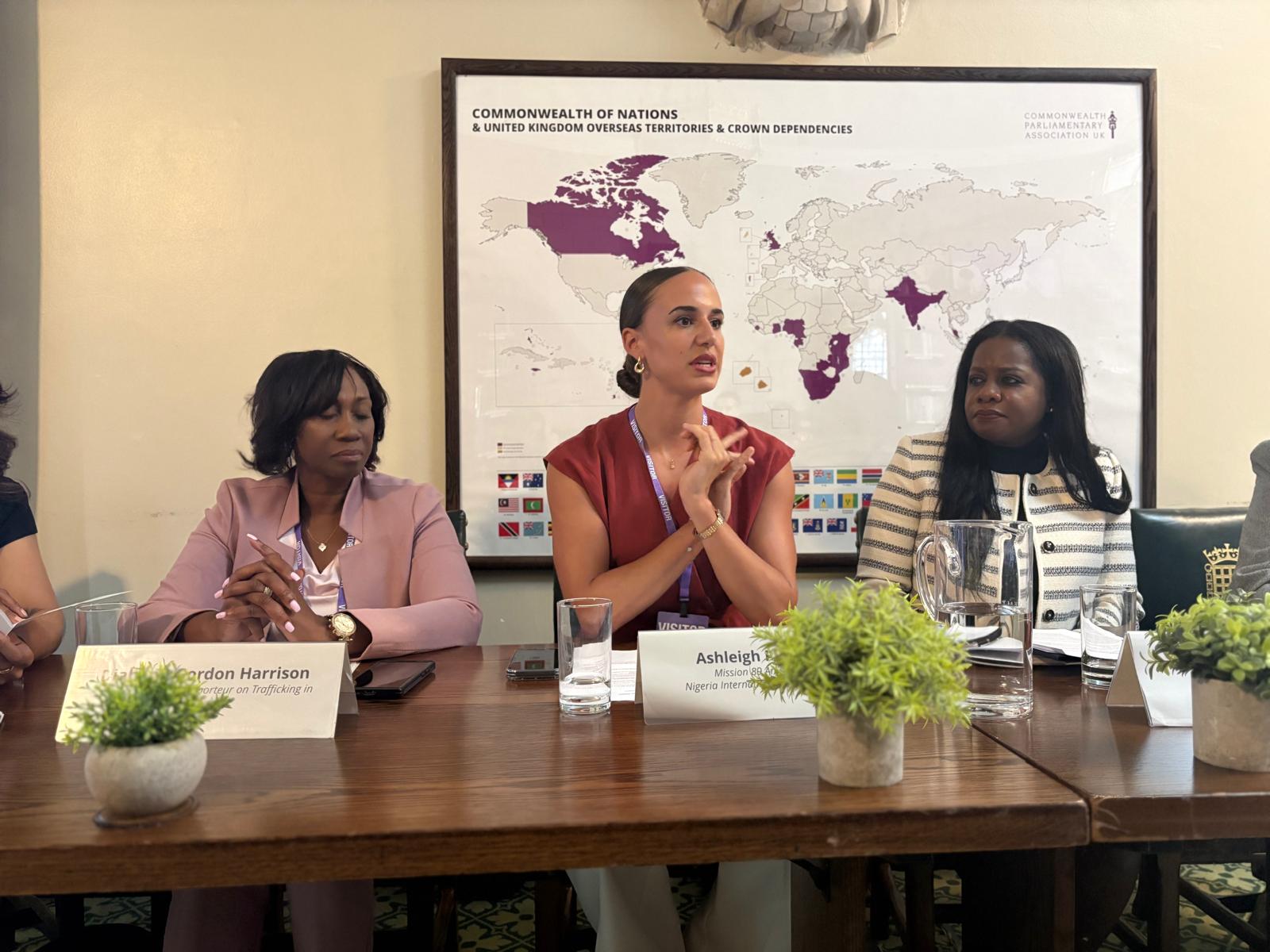
That lack of recognition, the panel heard, is itself part of the problem. It obscures the true scale of the issue and conceals parallel stories of exploitation. The first panellist, Ms Diahann Gordon Harrison, Jamaica’s National Rapporteur on Trafficking in Persons and Children’s Advocate, explained how the report had informed her recommendation that Jamaica’s anti-trafficking legislation be amended to include sport trafficking as a specific category. She also welcomed the Interpretive Guide as an important next step in supporting governments seeking to translate legislative ambition into practical implementation.
She spoke candidly about the resistance such a step can encounter:
“There is a reluctance among sporting officials and associations to even recognise that it exists. From the Jamaican experience, there is a fear that if it is publicly acknowledged, it will change the sport, change the country, change our image. So removing the veil is the first step.”
The Rt Hon Dame Karen Bradley DBE MP, who as Minister for Modern Slavery and Organised Crime steered the Modern Slavery Act 2015 through Parliament, reflected on a similar pattern in UK politics, where discussion is too often diverted towards subjects such as immigration rather than confronting trafficking itself. She argued that trafficking is fundamentally a financial crime involving the exploitation of one human being by another for profit, and that the challenge is to disrupt that business model through the effective implementation of existing legislation.
Ms Ashleigh Plumptre, Mission 89 Ambassador, Nigeria international and Women’s Africa Cup of Nations winner, drew on her own experience of how young athletes’ aspirations are exploited:
“For a lot of the girls it’s about how to get to Europe and get a professional contract. Many would do anything, for themselves and their families, to live the lifestyle portrayed on social media, which seems far simpler than it is.”
She also reflected on her work with Mission 89 in Nigeria, where awareness workshops with young athletes and coaches have encouraged individuals to come forward with concerns, reinforcing the importance of education and prevention.
A further, cruel dimension emerged during the discussion. Those who have been exploited are often reluctant to seek help because of shame. As Dame Karen observed:
“Imagine having to admit that you have been treated as a commodity, a vessel of abuse, rather than a human being.”
The panel’s moderator, Professor Parosha Chandran, human rights barrister and Professor of Practice in Modern Slavery Law at King’s College London, drew the discussion together by noting that, in the absence of consistent regulation of sports agents, the burden too often falls on potential victims and their families to recognise and guard against exploitation. Because few anticipate that sport recruitment can be used as a route into trafficking, trust is easily abused.
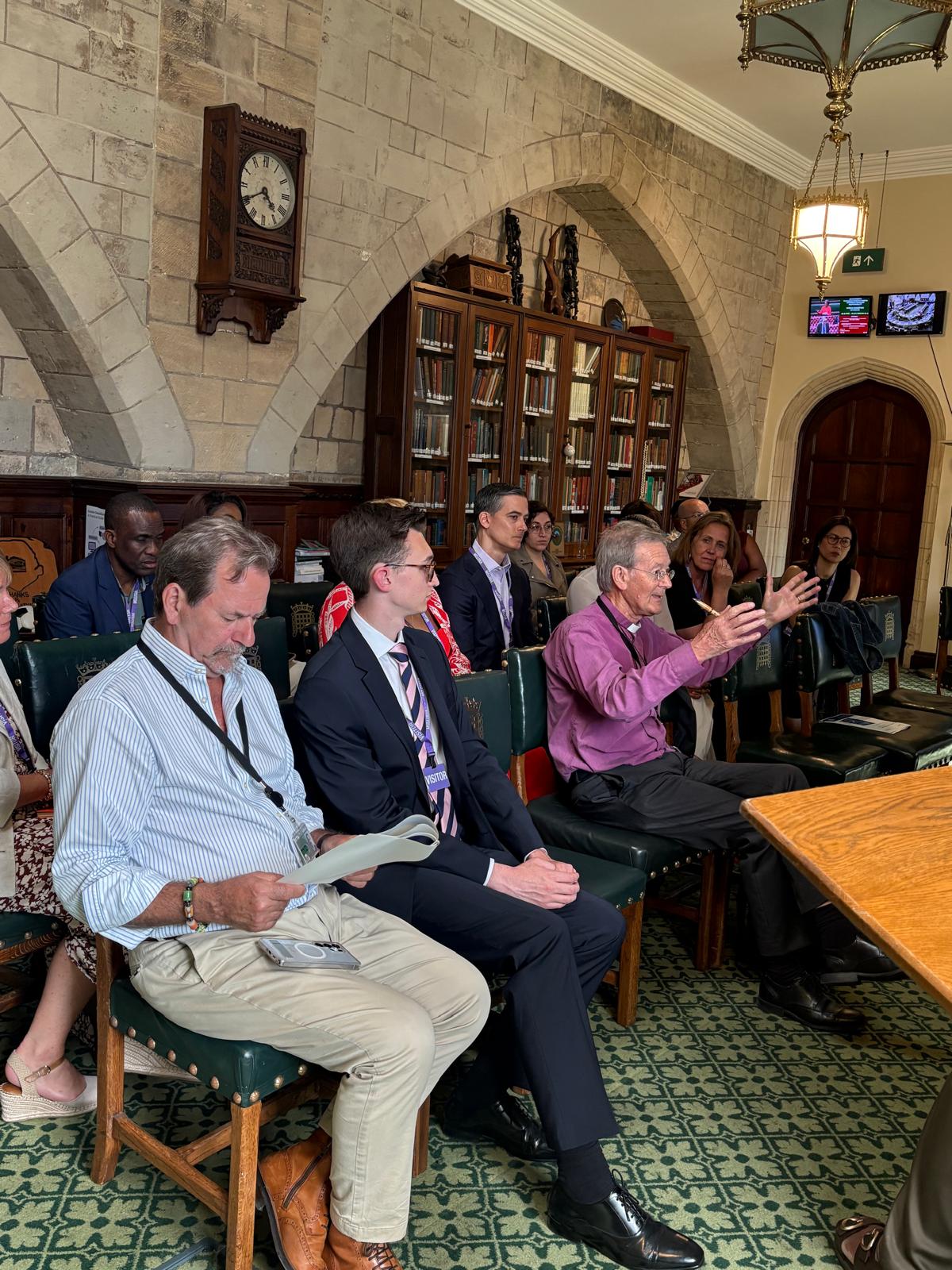
The discussion moved beyond raising awareness towards practical solutions. Panellists and participants highlighted the importance of strengthening the regulation of sports agents, promoting ethical recruitment practices, educating athletes, families and communities about trafficking risks, and equipping governments with practical tools to support legislative and policy reform. Collectively, these discussions reinforced that tackling sport trafficking requires coordinated action across governments, sporting bodies, civil society and international organisations.
Though the discussion laid bare the scale and human cost of sport trafficking, it concluded on a note of resolve. In her closing remarks, Ms Ruth Pope reminded participants that combating trafficking is a collaborative effort in which every individual contribution, however modest, combines to create meaningful change.
The event concluded with refreshments and a screening of that evening’s FIFA World Cup knock-out match between England and the Democratic Republic of Congo.
Mission 89 extends its sincere gratitude to CPA UK, the speakers and all those who attended for making the event such a success.